Posted by Kim Welch
740 views
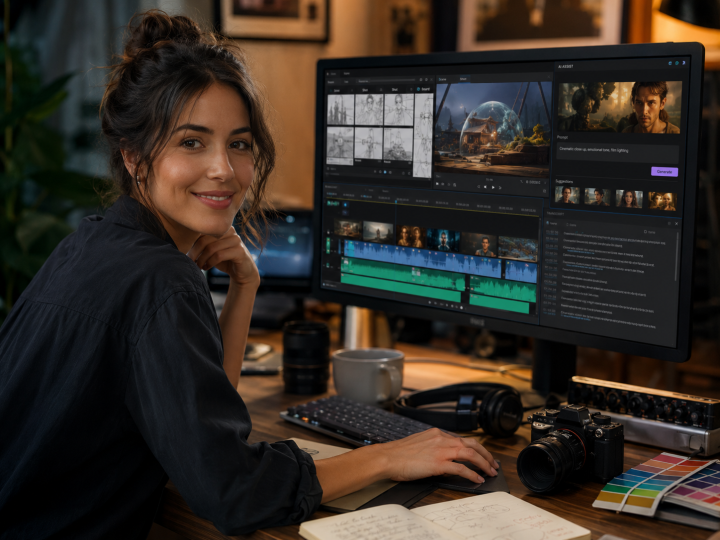
I want to encourage filmmakers of all levels to keep an open mind about the use of AI. Many would agree that it is not going to replace human creativity, but instead will augment the human mind. Being creative with how you use AI is going to be what makes the difference, and the only way you can be creative in the ways you use it is to try using it and find out what it can and can't do.
Can it write a Fifth Symphony? No, it can't do that, but can it correct the timing or write a modulation from one key to the next using a cadence? It absolutely can, but you have to know and understand which key to move from and which key to move to, and understand what you are doing and why you're doing it.
AI misses fundamental, critical things in storytelling and lacks a real feel for narrative, but that doesn't mean it's useless. It is changing how we do things in every industry, but it requires human beings to set it up, operate it, and monitor it. It makes mistakes. That is to be expected because it is built on our language and the model.
So, here are a few AI tools that are making a real difference for filmmakers right now, especially if you're working solo or on a tight budget. If you see some that you have tried on a project, please let us know your experience, and if you see others that are not on the list, please tell us.
Blender + AI add-ons (blender.org)
Blender itself is free, open-source 3D software, not AI, but its add-on ecosystem now includes AI denoisers that cut render times, text-to-3D and AI texture generators that build assets from a prompt, and bridges to AI video tools. For solo creators, this means producing 3D work that used to require a studio.
Google Flow (flow.google)
The most powerful free AI film tool out there in 2026, running Google's Veo model. It handles cinematic shot generation, camera-angle presets, and 4K upscaling at no cost, which removes the financial barrier for students and first-time creators who want professional-looking output without a crew.
Runway (runwayml.com)
The benchmark for professional AI video generation, and a favorite among filmmakers and VFX artists. Its Motion Brush lets you paint movement directly onto elements in a frame, and its camera controls give you real, intentional shots instead of random clips, which is why it's used on actual ad and narrative work.
ElevenLabs (elevenlabs.io)
The standard for AI voice in 2026. Voice cloning from short samples and multilingual dubbing with lip-sync mean indie filmmakers can get clean narration, dub into other languages, or fill in ADR without booking a studio. The free tier is genuinely usable for short narration.
Descript (descript.com)
An audio and video editor where you edit by editing the transcript, which is far faster for cutting interviews and dailies. Features like Studio Sound and filler-word removal make rough cuts dramatically quicker, helping documentary and content creators get from raw footage to a watchable cut in a fraction of the time.
Topaz Video AI (topazlabs.com)
The go-to for footage restoration: upscaling HD to 4K, denoising, and rescuing low-light or archival footage. If you're working with old material or footage shot in bad conditions, this is what salvages it.
One honest note: AI isn't replacing directors or cinematographers. The creative calls, pacing, performance, and what story is worth telling, still come from you. These tools just close the gap between your idea and a watchable result.
Join the forums, forums.studentfilmmakers.com or the network networking.studentfilmmakers.com or sign up here for www.studentfilmmakers.com
Comments